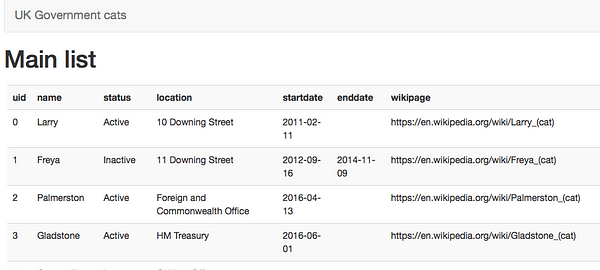
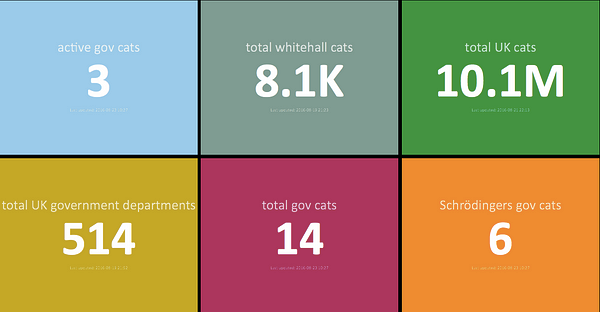
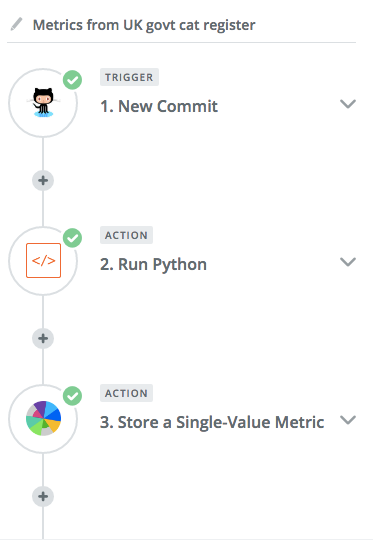
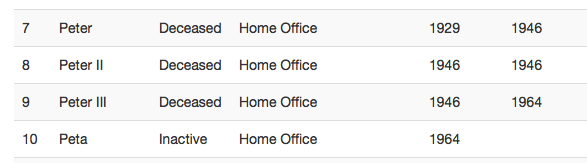
Last year I openly published data about some of the cats that work for the UK government. I ended up giving a talk about it. When publishing the data and giving the talk I skipped over the potential data protection and privacy issues.
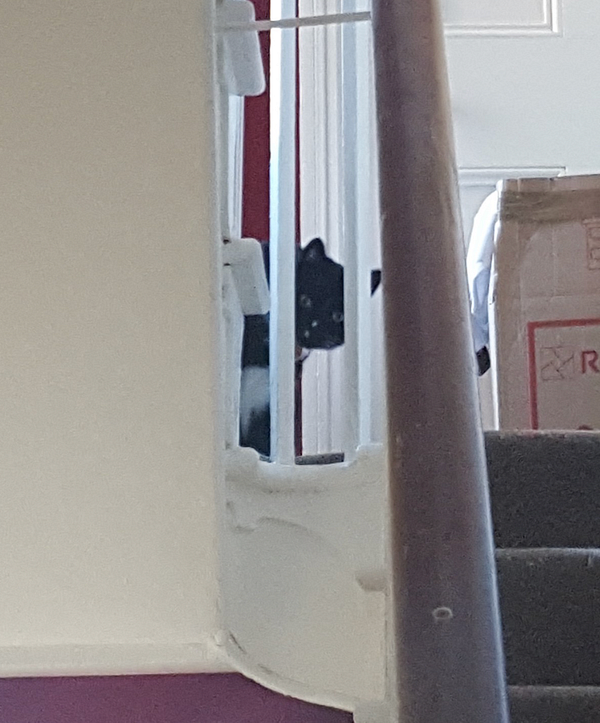
Some of those potential issues came up again recently when our family cat, Bugsy, was being transferred to our new home. I was nervous about the cat arriving safe and on time. A friend asked:
can’t you publish some data showing the cat on his journey?
Such a short and simple question. This is my long and complex answer. Most of my friends are patient people.
This post might sound like it is going to be whimsical —ok, there will be some cat whimsy…— but there is a serious point. Publishing and thinking about cat data helped me think and talk about other data things with more people.
Thinking and talking about data protection, ownership and control for cat data will have the same effect. It is pretty important that more people know how complex they are.
This cat data deserves data protection
Different countries have their own data protection and privacy laws. Personal data can be hard to define but at the Open Data Institute we encourage people to look at relevant legislation and start by simply saying:
Data from which a person can be identified is personal data.
If data can be combined with other information to identify a person, that data will still be personal data.
If there is personal data in a dataset then we should consider relevant data protection legislation and the univeral human right of privacy.
At this point I expect that lots of people reading this post will be thinking that a cat is not a person so neither the personal data definition or human rights do not apply.
This is true but, like other animals, cats do have rights. Some people argue that pets are becoming people, in a legal sense, and that animals deserve democratic representation. Perhaps cats do not have data protection rights today but if that might change in the future then perhaps I need to worry about it today.

Whilst this would be a fascinating topic to explore unfortunately, to paraphrase a recent article by Luciano Floridi on the rights of robots and artificial intelligence, I’m in danger of chasing my own tail when I should be focussing on the current opportunities and challenges with data that affect people. People like me. Our cat wasn’t moving home in a few year’s time, he was moving now; and I was nervous.
There is a simple reason why I need to think about data protection if I was to publish this cat data. Whether cats realise it or not, their data can refer to people. My cat lives in the same house as me. If you knew the destination of its journey then you would know where I live. If you knew the date when it was being transferred to a new home then you might be able to guess that my old or new home is empty. Etcetera.
So if I was to publish data about Bugsy’s journey I would need to think about the impact on privacy using a methodology like the one provided by the UK’s Information Commissioner’s Office (ICO) before I published the data.
Ownership of cat data is complex
I occasionally hear people saying that defining a legal right to personal data ownership will make this process easy. My privacy, my data, my choice. I doubt my cat cares about human laws but, according to the law, I own him. So I might legally own data about my cat and would have the legal right to choose to publish it. Unfortunately data ownership is not that simple and nor is cat data.
How is my cat’s identity defined? Some cats have microchips, and Edinburgh University have even given a library card to a cat so it can prove its identity and demonstrate its entitlement to borrow books, but our cat just has a phone number on its collar. Is that sufficient?
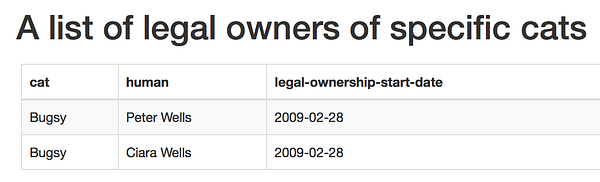
Meanwhile Bugsy is a family cat. He is owned by me and my wife. It might look like that joint ownership can easily be defined in data, but the world is more complex than my simple model. How is my identity and that of my wife defined? How would we verify our identities to say that we are allowed to track our cat on his journey? Identity management is hard.
And once we get past those issues I might find that my wife disagrees on how the cat’s data can be used. We both own and live at the same house that the cat is being transferred to. The data refers to both of us. My wife might think my nervousness is utterly ridiculous and not worth risking our privacy for. There have been several legal disputes over the ownership of pets. I don’t think it would calm my cat moving nerves if I was to take my wife to court over ownership of cat data.
Meanwhile we’re still missing something quite important. The cat isn’t travelling alone on his journey. He is being transported by an employee of a company. What about that company’s potential rights to own the data produced by their service? What about the cat transporter’s privacy?
Controlling cat data
At this point, when answering that simple question from a friend about publishing data about Bugsy’s journey to make me feel less nervous, I started to talk more about consent.
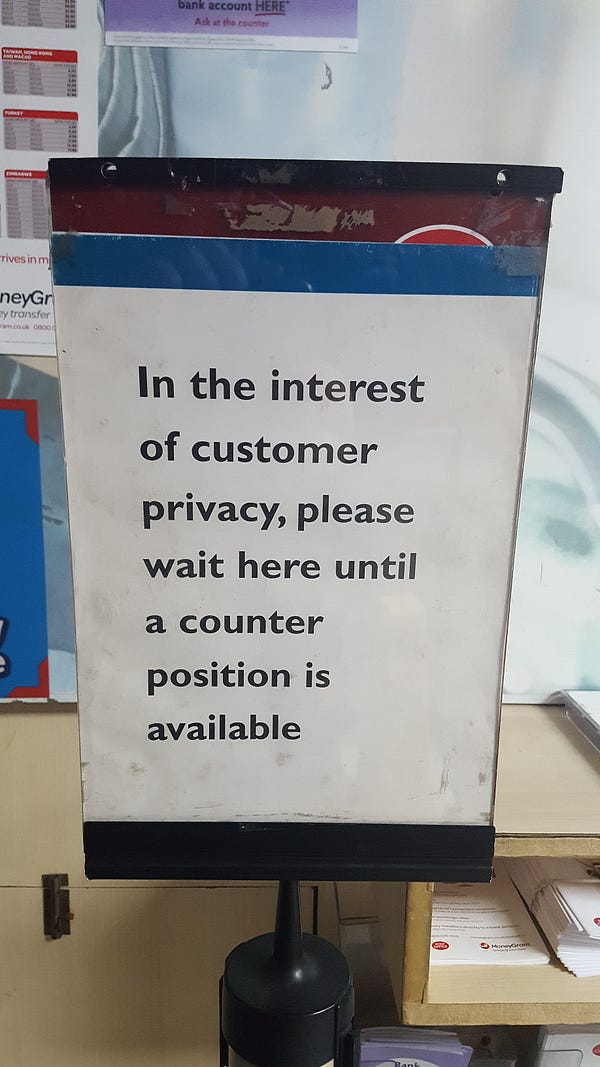
Giving people choice and ongoing control over how you use their data is becoming more important. It’s one of Tim Berners-Lees three challenges for the web. Some trading blocks, like the EU, and individual nations, like the UK, have decided that it is necessary to put in place new legislation that strengthen people’s rights over data. Consent is not always necessary but the ICO recently published some draft guidance on consent under that new legislation which I could use to help publish cat data.
My wife knows quite a bit about data so could give informed consent which I could record. I could also ask the cat transporter and their employer if they were willing to consent. To be clear I would want to give the cat transporter the choice of saying no. A world where people who transport cats have less privacy than other people does not sound a sensible world.
Unfortunately given the impending journey I did not have time to think about or research the cat transporter’s needs and skills. The ICO’s guidance says that I can assume that “adults have the capacity to consent unless you have reason to believe the contrary”, and I knew how to be open about how I planned to use the data, but without more research I would not know how to design something so that the cat transporter could choose whether to consent, or not. I might mistakenly assume that an online only service was good enough, despite a large proportion of the UK population having no access to the internet or insufficient skills to use it. The cat transporter could be one of those people.
And all I would have achieved by this point was possibly gaining consent. I would not have given the cat transporter control over the data about their journey. With that control they could reuse the data for another purpose, such as reclaiming their petrol costs or seeing what cat data tells us about people moving house around the country. My wife, the cat transporter, their employer and I all had rights to the cat data and should all be able to have some control over its use.
Sometimes you need to keep things simple
At this point my wife and friend both firmly interrupted me and told me I was not being utterly ridiculous but being completely and utterly ridiculous. I was trying to design a perfect solution that would work for many cats and purposes, rather than keeping things simple and starting with a solution for a particular problem. My nervousness about our cat.
My wife rang the cat transportation company and asked them to text us a couple of times during the journey. They agreed, of course. Sensible wife.
Data is complex, and that’s ok
Now you might read all of this and ask:
if we have to think through all of this complexity everytime we’re thinking of publishing data how will we ever build anything?
I don't think the cat is happy I've come home. pic.twitter.com/w11ZwGPv0i
— Peter Wells (@peterkwells) February 24, 2017
The team at the Open Data Institute, where I work, do the hard work to try and make data as simple and easy as possible so more organisations can get data to people who need it.
That requires us to work on lots of things including how to publish data; how people will search for it; the skills they need; how to use it in organisations, large and small, or whole sectors; and how to get data to benefit everyone. Lots of other people do similar things.
But sometimes I wonder if we and other people can make it sound too easy.
So when we’re encouraging more people to do wonderful things with data then as well as the brilliant possibilities we also talk about the challenges using both real examples and whimsical ones like the ones I faced with my cat data. Whimsical tales sometimes help convey simple messages.
We can build a better future with data but we need to solve problems and be realistic about the complexity if we are to build one that works for people. Data is complex, and that’s ok.