Tag: Digital

The GOV.UK app should take more responsibility

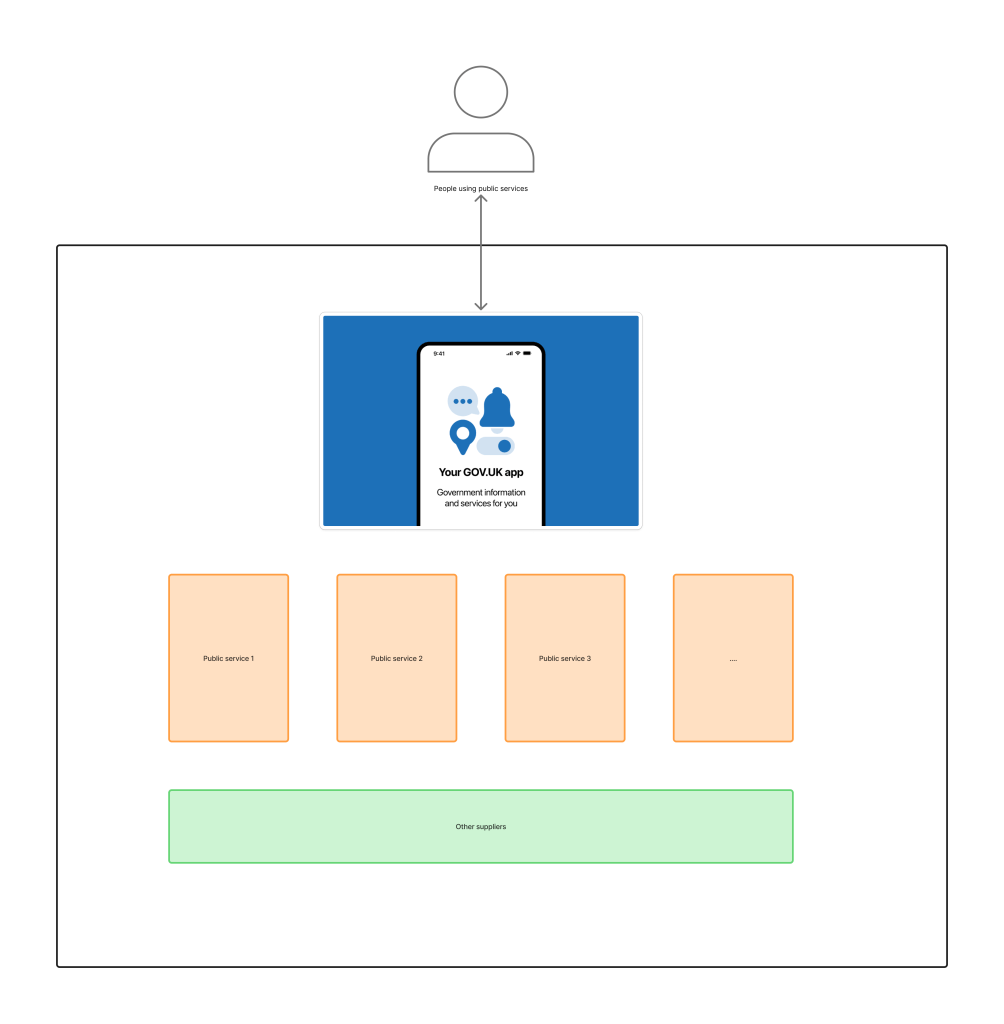
The UK’s Government Digital Service (GDS) launched a Beta version of its gov.uk app recently.

The app is intended to provide another way to access public services alongside other places like job centres, town halls, schools, telephone call centres and the gov.uk website.

Ideally people will be able to choose what route to use based on what works for them, the friends and family they help to access public services, and the particular services they need at the time they need them.

In the circles I work in there’s been lots of discussion of the app

One thing I’ve not seen mentioned is that the app tries to avoid legal responsibility for providing a decent public service to people. It even recommends that people take separate professional advice rather than relying on the services and information provided by the GOV.UK app.

It would improve public services across the sector if the app took more responsibility and encouraged other public services to do the same.

Responsibility by Nick Youngson CC BY-SA 3.0 Alpha Stock Images

The disclaimer section reads like a commercial service, not a public service

The app has a set of terms and conditions that reads like something you’d see in a commercial service, not a public service.

The disclaimer section says:

we do not provide any express or implied guarantees, conditions or warranties that the information available via the GOV.UK app will be:

+ suitable for your individual requirements 
+ available 
+ current
+ accurate

So, the government is unwilling to say that public service information provided by the government is accurate?

We do not publish advice on the GOV.UK app. You should get professional or specialist advice before doing anything on the basis of the content [published on the app].

So, if I used the app to look for government advice on how to get a UK driving licence then I should also speak with a lawyer before applying to the government? 

we’re not liable for any loss or damage that may come from using the GOV.UK app. This includes, but is not limited to, the loss of your:

+ income or revenue
+ salary, benefits or other payments
+ business
..[there’s more]

So, if I used the app to sort out something to do with my parent’s pension, there was a mistake in the app and my parent lost their pension then the government would not help me or them out?

Seriously?

How do things like this happen?

There’s a few things that could have led to this kind of disclaimer being added to the app. For example:

GDS might worry about taking responsibility for other public sector organisations. Even in its beta stage the app includes bits of public services provided by multiple public sector organisations. Perhaps GDS didn’t want to be held responsible for other organisation’s mistakes? Or even to be responsible for working out who is responsible? But part of the app’s job is to help people understand and deal with the many public sector organisations within it. Not to try to shift responsibility around and leave it to the public to work out how to hold organisations who fail them accountable for those failures.

Traditionally gov.uk has focussed on information. The proposition says that gov.uk does not offer advice on what the user should do, unless users need advice in order to complete their task. The app is due to have a chatbot, called GOV.UK Chat, added to it and chatbots can both add more complex supply chains and provide information in ways that more users will experience as advice. GDS may also be nervous about AI chatbots’ susceptibility to technical malfunctions, like ‘hallucinations’. But, let’s be honest, the point when information becomes advice has never been a clear one and as GDS’s AI playbook says “Ultimately, responsibility for any output or decision made or supported by an AI system always rests with the public organisation”. Sound advice.

When does information become advice?

GDS aren’t used to delivering apps and apps often have terms and conditions. GDS’s One Login app has a similarly strong disclaimer and says there is no liability for “loss or damage arising from an inability to access or use GOV.UK One Login“. Hardly a reassuring statement when millions of people will need to use One Login to get access to things like tax payments, state pensions, disability and unemployment benefits. One Login has already had at least one serious security vulnerability. Who will be liable if, or when, a hacker takes advantage of the next one?

Lawyers gonna be lawyers. It’s easy to imagine some lawyers recommending these kinds of terms and conditions, and people managing the app deciding they need to follow that advice rather than challenge it. If you look then you find that since 2013 gov.uk has also had a set of terms and conditions that don’t guarantee the government will provide accurate information and tell people to read the terms and conditions of all the public services they access through gov.uk. It’s important to support people to understand how public services work, but you can’t do that in a set of legal terms and conditions. Yuck.

The app should encourage the public sector to take more responsibility

GDS is not providing a commercial service that can hide behind contracts and lengthy terms and conditions. In the private sector you find backstop compensation schemes – like the Financial Services Compensation Scheme – when organisations fail. There is no equivalent for public services and, to put it politely, the UK government does not have a great record of running compensation schemes for its failures.

Instead the backstop for responsibility is ultimately things like administrative law and politics.

Would the app’s Ministers really want to stand up in Parliament and say that the app does not provide accurate information? That people should pay for professional advice after reading advice provided by the government? That the government isn’t liable for its own mistakes?

Not quite the vision being sold by Peter Kyle, and DSIT’s blueprint for a modern government, of more public services that work across institutional boundaries and do the hard work to make things simpler for people.

So, if government lawyers are the ones recommending contractual terms and conditions then both GDS team and its Ministers should say no.

By taking clear, legal responsibility at the app level, and tidying up responsibility on gov.uk too…, GDS can encourage other public sector organisations and their suppliers to take responsibility for providing better public services by making clear their actual legal and democratic responsibilities and ensuring they have clear liability before their services are made available.

The GOV.UK app can shape an ecosystem of other services and suppliers to take responsibility for providing better public services to people.

Given the government’s push on using more automation and technology clear responsibilities and liabilities will only become more important. It might reduce the chance of the government having to create more compensation schemes that can cost billions of pounds

A culture of responsibility across the public sector would mean that more public services work for people, and fewer public services that fail the people they serve.

The three definitions of digital in UK digital government

When I work within teams, talk with people and read policy and strategy documents, particularly around the UK public sector, I find it useful to quickly align on what people mean by some words so that we can get stuff done. “Digital” is one of those words. 

Many words have multiple meanings. Words can gain and lose those meanings over time as us humans do one of our human things and try to communicate concepts to each other.

Originally a Latin word for fingers and toes, “digital” became part of the phrase “digital computer” when electronic computers were invented in the 20th century. 

But digital has acquired several more meanings in the last few decades.

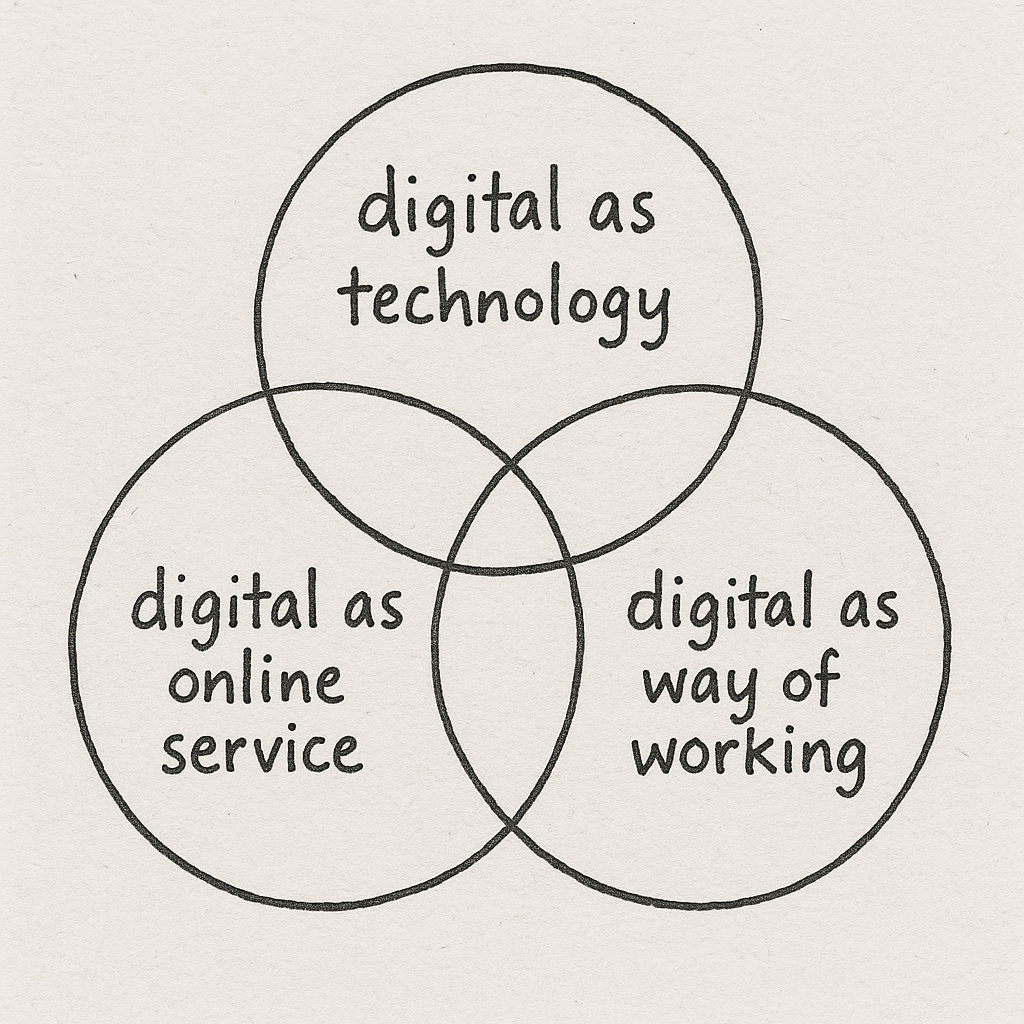
When I ask people what they mean by it there’s different definitions that I regularly hear in the world of digital government policy and public services:

  • Digital as a type of technology
  • Digital as an online service
  • Digital as a way of working 
Image drawn by chatGPT as my handwriting is mostly illegible, my drawing is worse and I didn’t want an image that looked too formal. (NB: like most Venn diagrams, the centre is not necessarily a thing to aim for…)

Sometimes these meanings get combined, which can be confusing. I find that disentangling them is useful.

Obviously ‘digital’ is not the only word which gets tangled up in this way, but given its importance it’s a useful one to align on.

1. Digital as a type of technology

Digital can be used to describe any technology related to electronic computers.

This was part of what was happening with the term ‘digital computer’. The original ‘computers’ were humans who added up numbers, it was the addition of technology that made the original computers ‘digital’.

A roomful of human ‘computers’, courtesy of the US Library of Congress. Note how they are all female. Programmed Inequality is a good read on the history of women and digital computers in the UK.

You see this definition used in terms like the ‘digital revolution’ – to indicate the changes happening as the world adapts to computers, internet and the web – or ‘digital infrastructure’ to talk about telecoms infrastructure and data centres. 

Implicitly this definition can exclude other forms of technology like physical machinery, roads, wheels, and paper.

2. Digital as an online service

The second usage is digital to mean online services that are only available over the internet or web. It might even be something that only works on a smartphone, like an app. I’m not sure how or why we’ve ended up calling these ‘digital services’ rather than ‘online services’.

Facebook is often called a “digital service” or Google a “digital company”. The UK has a Digital Regulation Cooperation Forum (DRCF) whose purpose is to “deliver a coherent approach to digital regulation for the benefit of people and businesses online” for regulating these kinds of services and companies.

While Facebook/Meta and Google obviously exist in the physical world – just think about one of their many offices, data centres, undersea cables or the tens of thousands of people who work to moderate content – when people talk about their ‘digital services’ they tend to think about the bits that are only visible online.

If you work in similar places to me you don’t need another image of a ‘digital service’, so here’s a GIF of a scary rabbit chasing a cat instead

Similarly the term ‘digital service’ can be used in digital government circles to mean the bits of a public service that are interacted with over the internet and web.

An online service like this is rarely the entirety of a public service – there are many reasons why governments can’t just build websites and apps – but they have become an increasingly important and visible part of public services.

I say rarely, because sometimes governments can reasonably decide that a service will only be accessed online, but there are limits. For example it might be appropriate to require large businesses to pay taxes online but it would be inappropriate to require individuals to pay taxes online unless there was a larger service that provided support to enable everyone to do it.

3. Digital as a way of working

Third, there’s digital as a way of working.

Tom Loosemore of Public Digital talks about digital as ‘applying the culture, processes, business models and technologies of the internet-era’ which is a pretty good description.

No, I’m not going to try and further define digital as a way of working. So, courtesy of Wikimedia, here’s a picture of a roughly organised wall of post-it notes as a way of getting it across.

It emphasises things that are not only technology and indicates that ‘digital as a way of working’ can be used to improve not only ‘digital as online services’ but also a wider set of services and institutions.

Some people take this kind of definition further to talk about who or what ‘digital’ is for. For example Public Digital’s description talks about using digital ways of working “to respond to people’s raised expectations”.  I don’t think everyone has raised expectations.

I tend to encourage teams to decide their purpose in their context.

If the context is delivering general public services then the purpose might be “to meet everyone’s needs”, if the context is tackling issues caused by lack of trust then the purpose might be “to deliver trustworthy services”, etcetera, etcetera, etc.

The definitions can get combined

Finally, it’s important to be aware that many people combine the definitions. 

Perhaps they’re using digital ways of working and digital technologies to deliver a digital service. Or perhaps it’s a policy or strategy paper where someone has liberally sprinkled the word digital into all sorts of places in the hope it will make the organisation look modern. Perhaps they’ve invented a wholly new definition, *gulp*.

This young man likes digital

Sometimes I even find people that don’t even realise that they’re limiting the potential usefulness of their modern ways of working by only applying it to computer technologies and only to bits of services that are visible online on the web and internet. That they’ve ended up accidentally prioritising a subset of the population and the method they need to use to access public services.

So, separating out the different meanings of the word digital can reduce confusion and enable teams to meet a larger set of needs.

Digital is not the only word that has multiple meanings

And finally. Obviously digital is not the only word that can be loaded with multiple meanings. Just try asking people what they mean by terms like ‘AI’, ‘product”, ‘policy’, ‘personalisation’ or ‘digital identity’ if you really want to have my kind of ‘fun’.

But ‘digital’ is one of the key ones and there’s at least three definitions regularly in use. Understanding what other people mean by it and aligning on a common meaning can be a useful thing to do.

Eight categories for how DWP uses data

Yesterday I was skimming the UK Department for Work and Pensions (DWP) latest whitepaper, called “Get Britain Working”, to see how they planned to use technology to help them deliver the policies and public services in it.

In doing so I was struck, not for the first time, by the wide number of ways in which the words ‘digital’ and ‘data’ are used across the public sector. As an experiment I thought I’d try to categorise them. This post is about ‘data‘, I might publish a similar post about ‘digital‘.

The categories in this whitepaper will be far, far, away from a complete list and all categorisations are loaded in some way, but some light grouping came up with eight categories that were interesting to me:

  • data as an input to and output of scientific research
  • data as an input to and output of a tool or public service
  • data produced as an official statistic 
  • data produced for policy development
  • data produced for service planning
  • data to describe a type of computer system
  • data as something that needs governance and could be used for many purposes
  • data as an enabler of unspecified other things

The current UK government, like all the previous governments, plans to make more use of data and technology. There are initiatives like the Data (Use and Access) Bill, the DSIT digital centre, and the National Data Library.

It’s interesting to consider which of these categories of data uses the UK has the capability to do repeatedly to a decent standard, and which are the ones where more work might be required.

Data as an input to and output of scientific research

There was one case of data being an output from a scientific research study. Data will be an input to this study too. There are a range of legal, ethical and professional frameworks guiding scientific research.

Research is one of the purposes that the National Data Library is meant to support .The current text of the Data Use and Access bill includes a change to the legal definition of research. The change broadens the definition of research beyond scientific research in the public interest.

“a place-based real-world evidence study … aims to evaluate the effectiveness of tirzepatide on obesity and its impact on obesity-related conditions in a real-world setting… As well as data on patient outcomes, such as a reduction in rates or even reversal of conditions such as diabetes, CVD and poor mental health, the study will also …”

Data as an input to and output of a tool or public service

There was one case of a new tool that uses data to produce data.

In this case the tool would provide a prediction that an individual is at risk of not being in education, employment or training. This might also be referred to as a public service that includes automated decision making (ADM).

This kind of tool comes with multiple risks, such as: unfairness and discrimination against some communities, or that the prediction is treated with too much certainty and used inappropriately by other tools, people or organisations when it might turn out to be flat out wrong.

Data-driven public services is one of the purposes that the National Data Library is meant to support and that the DSIT digital centre works on with departmental teams like DWP Digital.

“We will publish new guidance on using a Risk of NEET Indicator (RONI) approach and provide a new data tool so that local authorities can better identify those at risk of becoming disengaged and put preventative measures in place”.


“Under the accountability and data sharing frameworks of a future Youth Guarantee, the college informs the Mayoral Combined Authority that Luca is at risk of not being in education, employment or training.

A local, youth-focused community organisation commissioned by the Mayoral Combined Authority reaches out to Luca to offer support and encouragement to re-engage and explore his employment or further education options”

Data produced as an official statistic 

There were several references to data that, when you follow the footnotes, has been produced as an official statistic.

Official statistics are independently regulated by the Office for Statistics Regulation and there is a community of practitioners in and around the public sector.

Data shows that only around 31% of prison leavers are in employment 6 months after release and 46% are employed in the 6 months following completion of a community sentence.”


“While many mothers want to care for their children full time, survey data indicates around half of non-working mothers would prefer to work”


“The latest available data shows that the relative poverty rate (after housing costs) of children in households where all adults work was 14%, compared to 75% for children living in households where no adults work”

Data produced for policy development

There were multiple references to data being used to help develop policies.  It is unclear whether this data would be produced to similar methods and standards as official statistics or whether some other approach would be used.

While official statistics are openly published, data for policy development might be kept within the public sector and not published transparently. Often data for policy development comes from multiple sources and is linked together and analysed to find insights.

Existing initiatives like the ONS’s Integrated Data Service and DSIT’s data marketplace might support this work.

“The government wants local areas to have improved data to understand local population needs and to help design future programmes. We also need better data to track outcomes and develop the evidence base”


“We will continue to engage the expert Labour Market Advisory Board announced by the Secretary of State for Work and Pensions to provide the government with insight, ideas, and challenge. The immediate priorities of the Board…include job quality and progression, opportunity and equalities, health and inactivity, regional inequalities and data


“By linking migration data with skills and employment policy, we will ensure that training in England is aligned to labour market needs”


“It will draw on local and regional vacancy data and Local Skills Improvement Plans (LSIPs) to inform its skills needs assessments”

Data produced for service planning

There were a couple of places where data appears to be being used to help plan and carry out operational services.

This might be produced using similar methods as data for policy development, but it typically has a different audience with different capabilities and needs.

“This will work with Integrated Care Board leaders to further reduce waiting times and improve data and metrics and referral pathways to wider support services.”


“In August, the Department for Education introduced new statutory guidance for schools and local authorities on improving attendance, supported by comprehensive near real-time data in England

Data to describe a type of computer system

There was one reference to a type of computer system for data.

A team developing and maintaining a system like this might follow guidance from the DSIT digital centre or, as this particular system is in the health sector, guidance produced by the Department for Health and Social Care or NHS England.

“as well as exploring opportunities to utilise the data platform created by Our Future Health in partnership with the NHS”

Data as something that needs governance and could be used for many purposes

There were a couple of broad references to data being information that could be used for many things, but that needed appropriate governance. 

Local Get Britain Working Plans trailblazers that require “governance and management – including accountabilities and responsibilities across partners, and arrangements for data sharing


Youth guarantee trailblazers that require “Governance and management – including accountabilities and responsibilities across partners, arrangements for making the best use of data, and management structures.“

Data as an enabler for other unspecified things

And a couple of references to data being something that could enable other, loosely specified, things. These examples seemed to differ from the above as they did not explicitly mention aspects of governance.

“Developing further tools will also provide the foundational data to enable further opportunities to transform the services”


“To enable [more enhanced collaboration between Jobcentre Plus and the National Careers Service], a new England-wide data sharing agreement between the Department for Education and DWP will be put in place from winter 2024”

The emotional weight of digital proofs

My Dad died recently. I went to the registration office in the local town hall to officially register his death.

The registrar was polite, caring, and thoughtful.

They also said something that particularly struck home and made me think about the emotional weight of digital proofs. 

A typical registration office in the UK. Prompt: “an office within a UK town hall, the office contains a single desk, the town hall was built in the 19th century, the office has wood panelling, the desk has an old computer on it”, DALL-E 2

Death certificates are physical proofs

I live in the UK where you need a physical copy of a death certificate to do many of the necessary bits of administration, like closing bank accounts, canceling shop loyalty cards, transferring pensions, etcetera ectetera etcetera.

These physical copies are provided by the registrar as a proof of death. This proof gets mailed to organisations who need to be notified of the death.

Like many people my parents are disorganised. We did not know how many organisations would need to know.

So, as a family, we agreed to get lots of physical death certificates. We could then mail out the proofs as we discovered a need for them.

A proof of death can be upsetting, many years after the event

The registrar advised against this as some people had been upset by physical copies of death certificates. Not only in the period immediately after the death, but in the following months and years.

The physical copies of the death certificates are returned to people. They get put into boxes and piles of paperwork, alongside old school records, birth and marriage certificates. 

The registrar told me that some families said they could see or feel the presence of these death certificates.

They would come across them unexpectedly, or even just think about a box full of certificates, and get unhelpfully reminded of the complicated set of emotions that accompany any death. A larger number of copies increased the chance of this unhelpful reminder.

Ten pieces of paper may not weigh much physically, but they can carry a large emotional weight. 

Prompt: “a pile of paper, sitting in a loft, digital art”, Dall-E 2

More people and organisations are using digital proofs

Recently I wrapped up a bit of work with Projects by IF that included building digital proofs responsibly and by design.

A digital proof is an equivalent of a physical certificate. Rather than being physically shared a digital proof can be electronically shared between people and organisations.

Digital proofs can be designed so that both the proof and the act of sharing it are trustworthy. For example to verify that the certificate has not been altered, or that only the minimal amount of information is shared.

A well-known example of a digital proof is the proof of Covid vaccination that people who travelled internationally have needed to show for the last few years, but there are many others.

Some countries, issue digital proofs of immigration status, others have digital proofs of driving licences, and so on. These schemes say that they will modernise services and make it easier for people to get things done.

Many of these schemes have been controversial. For example, when the introduction of digital proofs is used to extend the number of services where people need to provide a proof before they can use it, or when the use of physical proofs is reduced in favour of digital proofs.

But it seems very likely they will become more common.

Digital proofs are now being built into smartphone operating systems – such as in Apple’s digital wallet. Lots of the initial focus is on credit cards, but both businesses and countries are exploring how to use them to share data and how to move a range of legal proofs into the digital world.

Apple Pay within Apple Wallet, Apple

What will the emotional weight of digital proofs be?

There are lots of long-term implications of building digital proofs.

From the controversies we see in the current implementations, issues of privacy and control, through to a growing reliance on weakly regulated digital infrastructure – like smartphone operating systems.

But what the registrar said about my dad’s death certificates made me think more about the emotional weight of those digital proofs. 

  • What will it feel like to carry a range of digital proofs with us? And into all of the places where we take our smartphones?
  • How will it vary by the type of digital proof? A school record or proof of age may feel quite different, to a vaccination record, an immigration status, or the proof of death of a relative.
  • Will the accumulation of proofs matter to people? To reduce the risk of unpleasant feelings will we need different places to store proofs that we need regularly, like a driving licence, to places where we store proofs that we rarely need?
  • How will the feelings and needs vary for different people and at different moments in their lives?

Some of these questions are things that will be researched and designed in particular services, others are ones that we can learn about from the people who already have to carry them, but some are questions that will only be answered in the aggregate, and over time.

As more digital proofs get created, as more people store them in their phones, and as our smartphones become an extension of that box in the loft containing information about ourselves and other family members.

Just like the paper-based death certificates I talked about with the registrar, digital proofs will not weigh much physically but their emotional weight could be much bigger.

prompt: a dusty box in a dusty loft, on top of the box is a smartphone, the smartphone is pristine and shiny, DALLE-2

The cost of online voting

A new report by Webroots UK on the cost of online voting in UK national elections was published last week. The report was backed by politicians from four large political parties — Labour, Conservatives, SNP and the Liberal Democrats. It is about one of our most fundamental democratic rights. It deserves debate.

The report argued that online voting would increase the number of voters and reduce costs by 26% per vote. Unfortunately it missed significant risks and argued for saving costs by making it harder for millions of mostly disadvantaged UK citizens to exercise their democratic rights. Rather than arguing to reduce the cost of democracy, we should be arguing to make it better.

The risks and decisions of online voting

One of the classic lines about online voting is that people can safely bank online so they should be able to safely vote online. An analogy that sounds useful but is unhelpful. Banking and voting are very different problems, carry different risks and societies make different decisions about them. To give three examples.

We are comfortable that banks and governments know us and can see how we spend money but want our votes to be secret. We choose to accept the risk that governments and banks might mistreat our finances, but are prepared to accept very little risk that governments and people might mistreat us because they know how we voted.The damage that could be caused is bigger and harder to undo. The risk is higher.

Meanwhile the damage caused by mistakes or manipulation of national elections is higher than in other types of election. The reward for successfully manipulating a national election will attract malicious attackers who will act for their own reasons at their chosen time.

Finally, there are risks alongside online voting. Multiple countries have seen online social media used to spread disinformation during elections. We are only just starting to understand how this happened, let alone understand the damage and what actions could reduce it. There is a risk that online voting will provide new ways for disinformation to have an impact.

These are the type of risks that people who want to introduce online voting for national elections need to consider and debate with society. We should make conscious decisions on whether or not to accept them.

4.7 million people or 15.2 million people

But even if we find an acceptable le online voting safe, or choose to accept the risks, there is another implicit argument in the report. That online voting will make it easier for up to 4.7 million people and reduce costs by making voting harder for up to 15.2 million people.

The report used a survey to argur that online voting would increase the number of voters by up to 4.7 million. These are people who do not currently go to polling stations (the places where people can vote in person) but would vote online. This would lead to a cut in administration costs by reducing the number of polling stations or reducing mailing costs by moving election material online. We will need less of these as some people vote online.

It failed to discuss how many people do rely and will continue to rely on paper voting and electoral information. As the UK’s Goverment Digital Service recently said “paper isn’t going to go away”.

A report published by the Good Things Foundation said that 15.2 million people in the UK are either non-users, or limited users of the internet, that 7.5 million of those people are under the age of 75, and that 90% of non-users can be classed as disadvantaged.

The cost reduction measures in the Webroots report will make voting harder for these millions. They will have further to travel and find it harder to get information about who to vote for.

Politics is about choices. What gets done and what does not get done. Who wins and who doesn’t. I’m surprised that politicians from these major parties appear to favour the advantaged over the disadvantaged. Why they find it appropriate to reduce the quality of service for so many.

Rather than arguing for an online service or cost reduction, argue for a better service

The Webroots report is fundamentally starting from the wrong place. It is arguing for an online service that will reduce cost, rather than arguing to improve the quality of service. Unfortunately this is a common approach when using modern technology to improve existing public services.

The UK Parliament’s new e-petitions service only offers the ability to share a petition via social media and provides no way to combine online petitions with paper petitions that are hand-signed in communities. While the logical conclusion of wanting to make elections cheaper is to simply “do less” and cancel elections. Perhaps we could use an algorithm and some data.

Doing the hard work of research and experimentation to discover how to improvr democracy using modern technology in a number of ways, as organisations like Democracy Club do, is more useful.

We will find that we can and should use modern technology to improve democracy for everyone such as through online voting, better designed forms, making it easier to find a polling station, tools to help polling station staff, and a whole host of other things that might make democracy better.

As we make those improvements we should take the opportunity to have a more informed debate over the risks and who benefits, but we shouldn’t focus solely on online services and cost reduction we should make democracy better for everyone.

As the Electoral Commission said in their recent report on the experiences of disabled people in the last UK election:

Some of the changes which people have told us would make registering to vote and voting easier would cost more money. But we would like to see things changed so everyone can register to vote and vote.

That sounds good. Doesn’t it?

© 2026

Theme by Anders NorenUp ↑

This website stores cookies on your computer. These cookies are used to provide a more personalized experience and to track your whereabouts around our website in compliance with the European General Data Protection Regulation. If you decide to to opt-out of any future tracking, a cookie will be setup in your browser to remember this choice for one year.

Accept or Deny