These are the approximate words I said at the launch of the new All-Party Parliamentary Group (APPG) on data analytics on 31 October. An APPG brings together representatives from different political parties from both the House of Commons and House of Lords to pursue a particular topic or interest. Daniel Zeichner MP’s speech from the launch is also online. Other speakers were from TfL, Experian, CompareTheMarket and the Institute for Environmental Analytics. In person I wandered off topic a bit based on audience reactions but I promise that there were no cat jokes.
Hi, thank you to everyone who’s come along and for inviting us to speak. I work at the Open Data Institute, or ODI as it’s more commonly known. The ODI’s mission is to connect, equip and inspire people around the world to innovate with data.
It is based in London but the network is global. We have nodes and members on six continents and in every nation of the UK. We do research, train people, advise them, introduce them to people with similar interests, give them simple tools to help them publish and use data, incubate startups and encourage thinking on fundamental issues such as data infrastructure and how to use personal data in a way that creates trust. We do this with large businesses, startups, charities and governments. We are a global voice for the better use of data to deliver social, environmental and economic impact.
The ODI is a not-for-profit and was founded five years ago by Tim Berners-Lee and Nigel Shadbolt. Both of them are at the yearly ODI summit which takes place at the British Film Institute tomorrow.
Bringing people together to solve common problems
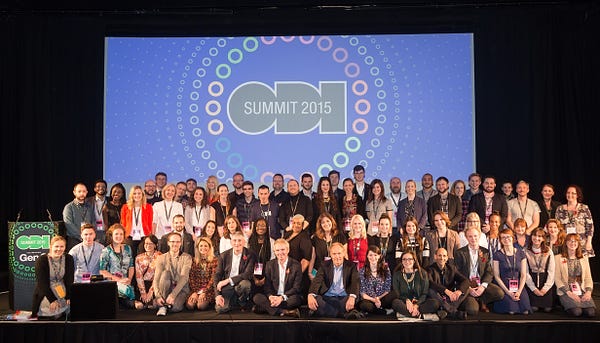
The summit is kind of unique, as is the ODI. It brings together large corporates with charities and startups; people interested in global development and democracy with people interested in the latest smart cities and transport trends; people from local government, national government and reps from global institutions. The attendees and speakers come from around the world. They all believe that openness and data can benefit them and everyone else too. (you can watch a stream of many of the summit sessions)
Which brings me to this all-party parliamentary group on data analytics. I’m a big fan of democracy and I’m also a big fan of things that bring together people from different backgrounds such as elected representatives and peers from across the political spectrum to find common points of interest, or problems, where people can work together to get things done and make things better. It’s the type of approach we use to help bring together large sectors like banking and agriculture, another one will be announced tomorrow. I won’t spoil the surprise. (it was sports)
An age of data abundance
We are in an age of data abundance with billions more people and devices coming online. It’s ever cheaper to collect, use and publish data. A web of data is evolving that sits alongside and behind the web of documents which changed our lives when Tim Berners-Lee invented the web 20-odd years ago. Our experience from the last 5 years is that that data will create most value when it is as open as possible while respecting privacy: an open future. But the future is uncertain.
We need to work together to shape an open future because whilst the current wave of technology change has bought many benefits it also carries many risks. Privacy risks, monopoly risks, democratic risks. We need to overcome those risks and project a positive message to get to a good future.
This is for everyone #london2012 #oneweb #openingceremony @webfoundation @w3c
— Tim Berners-Lee (@timberners_lee) July 27, 2012
Tim famously said “this is for everyone” when tweeting about the world wide web from the launch of the London Olympics in 2012. The type of open thinking that Tim showed when he gave away the web is going to be necessary if we are going to realise the brilliant potential of this new web of data to benefit everyone.
And that open thinking is what we hope to see from this all-party parliamentary group. As well as the rest of us we need government and legislators to play an active part in making this happen. Government can lead by example.
Data for everyone
We can benefit everyone if we build data infrastructure (vital reference datasets like maps, lists of local authorities and addresses, and tools, processes, policy, legislation, organisations) which is reliable, adaptable, trustworthy, and as open as possible. Open in the sense of culture as well as open data.
We need to provide data skills for citizens, business and policymakers, with policymakers using data both for evidence and as a tool to achieve their policy ends.
And we need to encourage open innovation. A bridge between academic research, public, private and third sectors, and a thriving startup ecosystem where new ideas and approaches can grow. Innovation that solves problems.
We describe this as the open future. A future where we’ve understood and tackled those risks, made data as open as possible and created benefits for citizens, businesses and government. Data for everyone.
There were questions
After we talked the audience asked questions covering a whole range of topics from data in manufacturing and engineering; trust in use of data; public sector reform; EU proposals for copyright and how that impacted on organisations holding data; and whether people should be paid when their data is used. A wide range, as you’d expect from something that connects together and underpins sectors across the economy.
The last two questions I found particularly interesting. Both of them seemed to come from applying models from the real world to something, data, which has different qualities. Data is non-rivalrous, it benefits from network effects, etcetera. That’s why the economics of data are different from other things and still being researched. The questions also seemed to come from an implicit assumption that we could use the concept of ownership in the physical sense of the word. We need to be careful in how we use the language of ownership to address questions about data. Physical world metaphors don’t readily fit the data world. And even our understandings and expectations of ownership in the physical world aren’t as simple as they seem. This blog from Ellen Broad is a good read and what I channeled in my response. I hope the APPG thinks about those questions and the concept of ‘data ownership’ deeply. Its members will be part of shaping the legislative environment that will help us get to that open future.
Leave a Reply